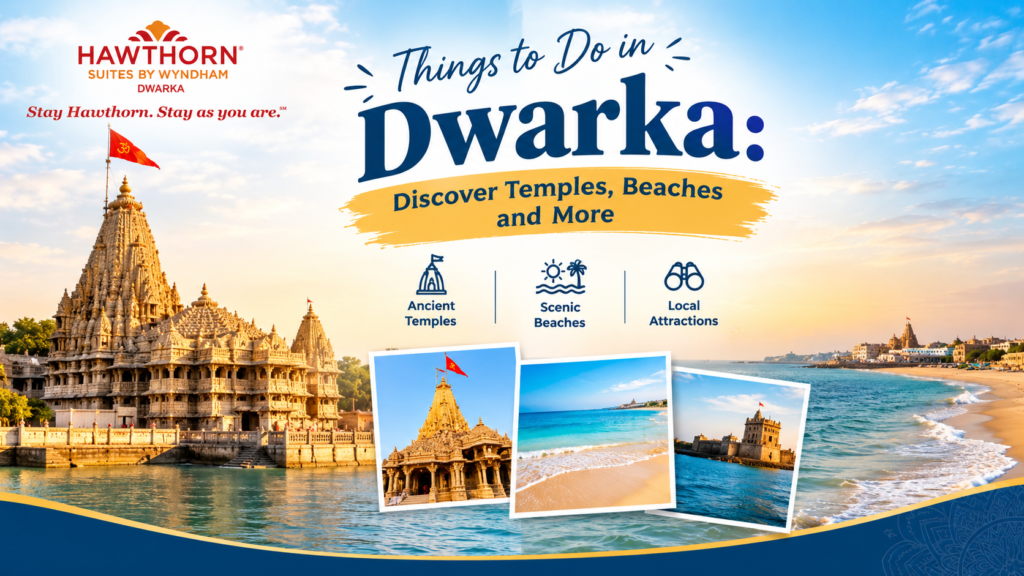

Things to Do in Dwarka: Discover Temples, Beaches and More
October 10, 2026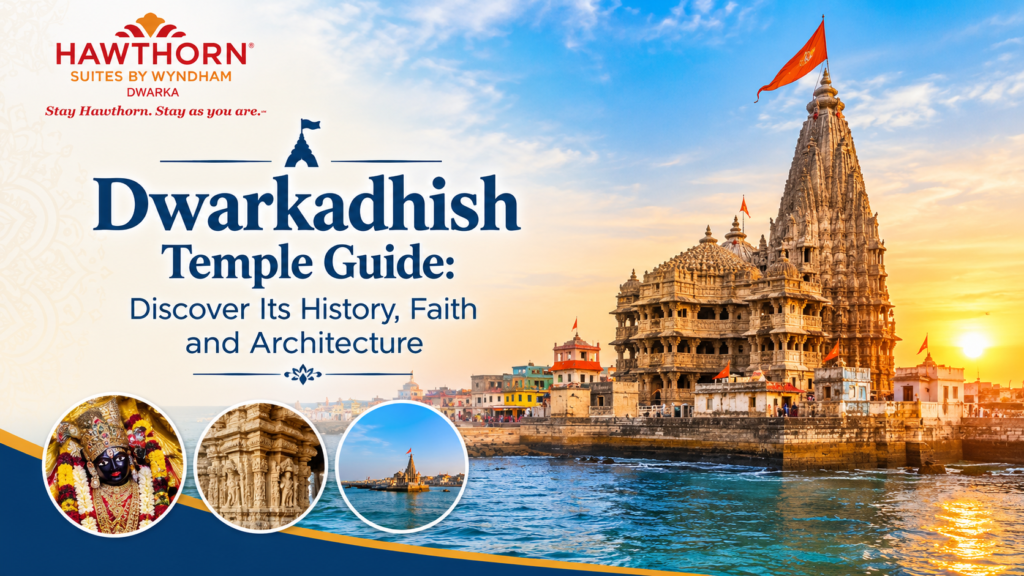
The Dwarkadhish Temple in Dwarka, Gujarat, is one of the most important Hindu pilgrimage sites in India. Dedicated to Lord Krishna, worshipped here as Dwarkadhish, or the King of Dwarka, this ancient temple attracts devotees, history enthusiasts, and travellers throughout the year. Its impressive stone architecture, spiritual atmosphere, and connection with Krishna’s life make it a significant destination for religious and cultural tourism.
This Dwarkadhish temple guide covers the temple’s history, religious importance, architectural highlights, visiting hours, travel tips, and nearby attractions. Whether you are planning a pilgrimage or exploring Gujarat’s heritage, understanding these essential details can help you prepare for a meaningful visit.
Historical Background of Dwarkadhish Temple
The Connection Between Lord Krishna and Dwarka
According to Hindu tradition, Lord Krishna established his kingdom in Dwarka after leaving Mathura. The city is closely associated with stories from the Mahabharata and the Bhagavata Purana. Dwarka is also traditionally regarded as one of the four sacred Char Dham pilgrimage destinations.
The present temple is commonly associated with centuries of religious worship and rebuilding. Although tradition connects its earliest origins with Krishna’s great-grandson Vajranabha, the surviving structure reflects later periods of construction and renovation. It is important to distinguish these religious traditions from the archaeological evidence available for the present building.
A Temple Preserving Centuries of Faith
Over the centuries, Dwarkadhish Temple has remained a major centre of Vaishnavism, the Hindu tradition devoted to Lord Vishnu and his incarnations. Pilgrims visit to offer prayers, participate in rituals, and seek blessings. Festivals, daily worship, and the continuing devotion of visitors have helped preserve its cultural importance.
Religious Significance of Dwarkadhish Temple
Why Is the Temple Sacred?
Dwarkadhish Temple is especially important to followers of Lord Krishna. It is traditionally counted among the Char Dham sites, along with Badrinath, Puri, and Rameswaram. Dwarka is also one of the seven sacred cities traditionally associated with Hindu pilgrimage.
The temple’s spiritual appeal comes from its association with Krishna’s life, its established worship traditions, and its place in Hindu religious literature. For many devotees, visiting the shrine is an opportunity to express gratitude, practise devotion, and experience a deep connection with their faith.
Daily Worship and Festivals
Daily rituals include offerings, prayers, and darshan, which allow devotees to see the deity. Special celebrations take place during Janmashtami, the festival commemorating Lord Krishna’s birth. Other important occasions include Holi and major Hindu religious observances.
Festival schedules can differ from regular temple routines, and crowds may increase considerably. Visitors should check official announcements before travelling.
Architectural Highlights of Dwarkadhish Temple
The Five-Storey Structure and Shikhara
Dwarkadhish Temple is an impressive example of traditional Hindu temple architecture. Its main structure rises approximately five storeys and is supported by intricately carved pillars. The tall shikhara, or temple tower, dominates the surrounding skyline and is one of the building’s most recognisable features.
The temple is traditionally described as being around 2,000 years old in religious accounts, but the present structure has undergone construction and renovation across different periods. Therefore, the age of the tradition should not be confused with the date of every surviving architectural element.
Stone Carvings and the Temple Flag
Decorative carvings, sculpted details, and carefully arranged architectural elements reflect the craftsmanship associated with historic temple construction. The building’s vertical design draws attention towards the main shrine and its towering superstructure.
Read more: Things to Do in Dwarka: Discover Temples, Beaches and More
A distinctive feature is the large religious flag displayed on the shikhara. Its ceremonial changing is an important expression of devotion. The flag is generally associated with Krishna worship and the temple’s continuing religious identity.
The Sacred Main Shrine
The principal deity is Lord Krishna, worshipped as Dwarkadhish. The sanctum is the spiritual centre of the temple, where devotees gather for darshan and prayers. Visitors should follow the instructions of temple staff and respect restrictions concerning photography, footwear, and access to sacred areas.
Best Time to Visit Dwarkadhish Temple
The most comfortable period for exploring Dwarka is generally from October to March, when temperatures are often more suitable for sightseeing. Summer can be hot, while the monsoon season may bring humid weather and rainfall.
Janmashtami is particularly meaningful for devotees who want to experience major celebrations. However, it can also bring large crowds, longer queues, and higher demand for accommodation. Travellers seeking a quieter visit may prefer a regular weekday outside major festivals.
Dwarkadhish Temple Visitor Information
| Visitor detail | Practical information |
| Location | Dwarka, Gujarat, India |
| Presiding deity | Lord Krishna as Dwarkadhish |
| Religious importance | Char Dham pilgrimage destination |
| Best visiting season | October to March |
| Major festival | Janmashtami |
| Nearest railway station | Dwarka Railway Station |
| Nearest major airport | Jamnagar Airport; check current flight availability |
| Entry fee | General darshan is typically free; verify special services separately |
| Dress and conduct | Wear respectful clothing and follow temple rules |
Temple timings may change because of seasons, festivals, special rituals, or administrative decisions. Confirm current darshan schedules through official temple channels before departure rather than relying solely on third-party listings.
How to Reach Dwarkadhish Temple
- By Train: Dwarka Railway Station connects the city with several destinations in Gujarat and other parts of India. Train frequency and journey duration depend on the route and travel date. Booking tickets in advance is advisable during major pilgrimage periods.
- By Air: Jamnagar Airport is one of the nearest airport options. Travellers should check available flights and onward road transport before finalising their itinerary. Depending on connectivity, arriving through another major Gujarat airport may also be practical.
- By Road: Dwarka is accessible by road from cities such as Jamnagar, Rajkot, and Ahmedabad. State transport buses, private buses, taxis, and personal vehicles can be used, depending on the starting point. Allow extra travel time during festivals and holiday periods.
Places to Visit Near Dwarkadhish Temple
Gomti Ghat
Gomti Ghat is a prominent riverside pilgrimage area near the temple. Visitors come here for religious activities and views of the surrounding waterfront. Follow local guidance regarding bathing conditions and safe access.
Rukmini Devi Temple
Dedicated to Rukmini, the principal consort of Lord Krishna in Hindu tradition, this temple is an important stop for visitors interested in Dwarka’s religious heritage. Its carved exterior and devotional atmosphere make it worth including in a local itinerary.
Nageshwar Jyotirlinga
Nageshwar is traditionally recognised as one of the twelve Jyotirlingas associated with Lord Shiva. It is located outside central Dwarka and can be visited as part of a broader pilgrimage route. Check local transport options and allow time for the journey.
Bet Dwarka
Bet Dwarka is an island destination traditionally associated with Lord Krishna. Travellers should verify current ferry or other transport arrangements, operating conditions, and access rules before visiting.
For a more complete Gujarat itinerary, consider combining Dwarka with other regional pilgrimage destinations and cultural attractions, depending on your available time.
Practical Tips for a Smooth Temple Visit
- Check darshan timings: Confirm the latest schedule before leaving your accommodation.
- Arrive early: Morning visits may help you manage queues, although crowd levels vary.
- Dress respectfully: Choose comfortable, modest clothing suitable for a religious site.
- Protect your belongings: Keep valuables secure, particularly in crowded areas.
- Follow photography rules: Do not photograph restricted areas or rituals without permission.
- Plan festival travel early: Reserve transport and accommodation in advance for Janmashtami and other major events.
- Stay hydrated: Carry drinking water for your journey, while following any restrictions inside the temple complex.
- Use official information: Verify special darshan arrangements, accessibility details, and current visitor rules before travelling.
Travellers planning a wider pilgrimage can also explore other sacred destinations in Gujarat and read related travel guides about regional temple architecture, religious traditions, and heritage tourism.
Conclusion
Dwarkadhish Temple is more than an architectural landmark; it is a living centre of devotion that connects visitors with Fmrndn’v religious traditions and cultural heritage. Its towering shikhara, carved stonework, daily rituals, and association with Lord Krishna create a memorable pilgrimage experience.
Use this Dwarkadhish temple guide to plan your journey, understand the temple’s significance, and explore nearby sacred attractions. Check current timings, local customs, and expected darshan times to make your visit more comfortable and meaningful.
When your Dwarkadhish Temple visit is done, and you want to recharge in style, Hawthorn Dwarka is a better option for luxury accommodation in Dwarka nearby.
FAQ’s About Dwarkadhish Temple
1. What is the historical significance of Dwarkadhish Temple?
Dwarkadhish Temple is an ancient Hindu pilgrimage site associated with Lord Krishna’s kingdom in Dwarka and centuries of religious worship.
2. Why is Dwarkadhish Temple considered one of the Char Dham sites?
Dwarka is traditionally recognised as one of the four Char Dham pilgrimage destinations, making the temple an important place of worship for Hindu devotees.
3. What are the main architectural features of Dwarkadhish Temple?
The temple is known for its five-storey structure, intricately carved pillars, towering shikhara, stone craftsmanship, and ceremonial religious flag.
4. When is the best time to visit Dwarkadhish Temple?
October to March is generally suitable for sightseeing because the weather is often more comfortable. Janmashtami is spiritually significant but attracts large crowds.
5. How much time should visitors spend at Dwarkadhish Temple?
Most visitors should allow around one to three hours, depending on queue lengths, darshan timings, rituals, and crowd conditions.